
Good mobile app UX makes people enjoy using your app. It helps users reach goals fast and feel confident. This guide explains simple steps to plan, test, and polish mobile app UX so your product works well for real people.
Read on for clear methods, short checklists, and hands-on advice you can use today. The tips focus on practical design choices, testing, and measuring success for mobile app UX across teams.
Design Principles
Start with clear goals for your app. Decide what tasks users must do and which tasks are optional. Prioritizing tasks helps you place the most important actions where they are easy to reach.
Keep screens simple. Limit choices and show one main action per screen when possible. People scan screens quickly on phones, so use short labels and clear visual hierarchy to guide attention.
Use consistent patterns. When buttons, colors, and spacing behave the same across the app, users learn faster. Consistency reduces errors and builds trust in the product.
Design with the key term mobile app UX in mind. That means thinking about touch, small screens, and short sessions. Design choices should make tasks faster and reduce mistakes on the device.
Know your users
Research helps you design for real needs. Talk with a few users, watch them use a prototype, and record where they get stuck. These simple steps reveal key problems fast.
Create basic personas and scenarios. A persona is a short profile of a typical user. Scenarios describe what a user wants to do. These tools keep the team focused on real people rather than guesses.
Think about context. People use apps while walking, waiting, or multitasking. Design screens that work in noisy, bright, or rushed settings. This improves success in real life.
Make user-friendly mobile apps the goal of every decision. When you name this target, designers and developers will prioritize clarity, speed, and easy controls. That focus shapes layout, copy, and interactions.
Navigation and structure
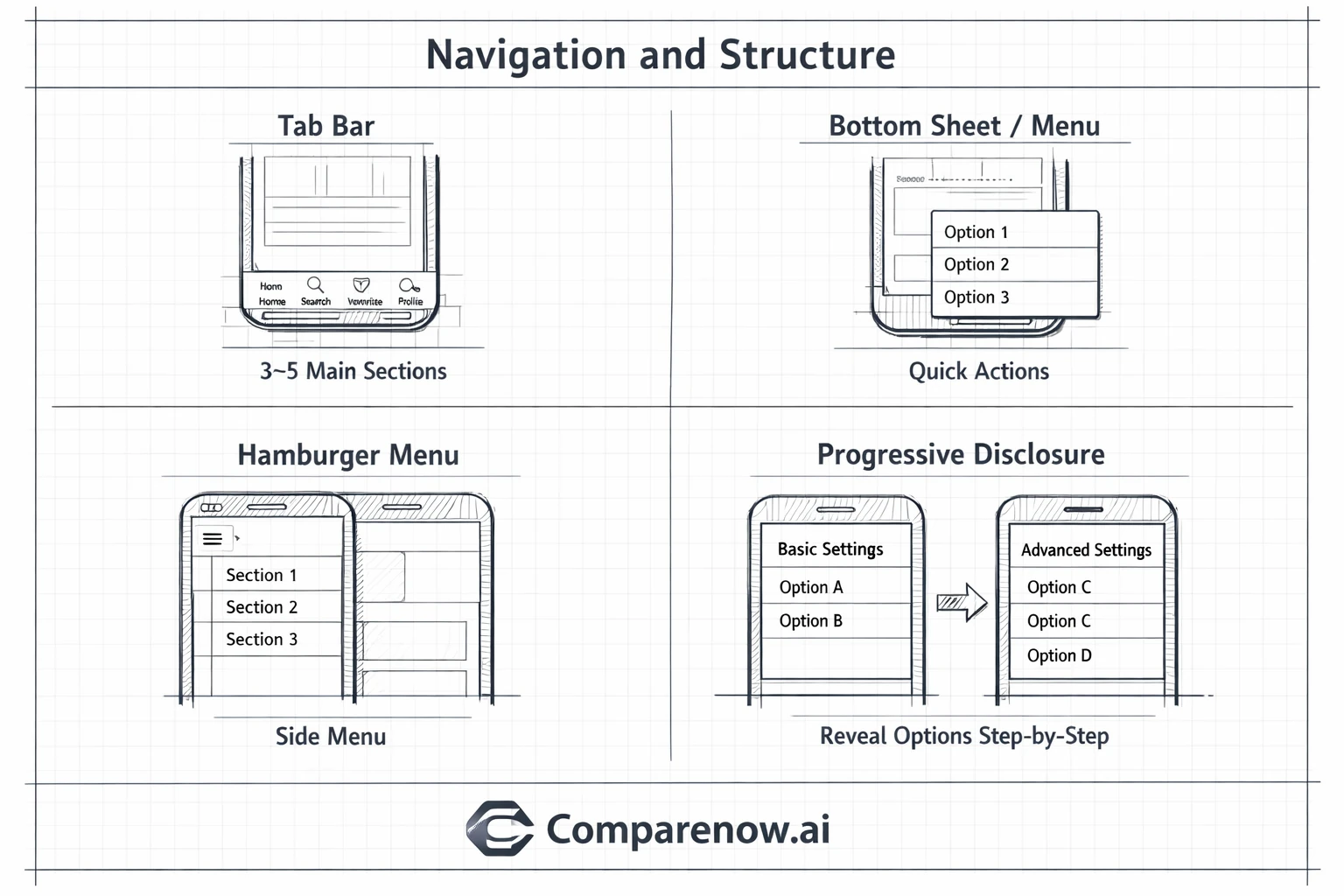
Good navigation helps users move through the app without thinking too hard. Hierarchy and clear labels are the base of good structure. Build navigation that matches how users expect to find things.
Choose patterns that match your app type. Tab bars work well for 3-5 top tasks. A side menu may fit apps with many sections. The choice should reflect user needs, not designer preference.
Before a list, use a short lead-in sentence that explains why the patterns matter and when to use each one. This helps teams choose the right pattern for their app size and goals.
- Tab bar: Best for 3-5 main areas. Visible and quick to reach with the thumb.
- Bottom sheet/menu: Good for contextual actions and quick choices without leaving the screen.
- Hamburger or side menu: Use when there are many sections, but avoid hiding critical actions behind it.
- Progressive disclosure: Show only what is needed, and reveal advanced options later.
Test navigation early. Ask users to find items and observe time to success. Measure where users hesitate and simplify labels or move actions closer to common tasks.
Interaction and visual design
Make tap targets large enough and spaced well. Small or crowded targets cause errors. A clear visual state for buttons reduces mistakes and raises confidence.
Use motion and microinteractions to confirm actions. A subtle animation on tap or a small success message helps users know the app responded. Keep animations short and purposeful.
Before a list, add a paragraph that explains key design elements to check when you polish screens. This helps teams focus on the highest impact visual changes.
- Typography: Use readable sizes and contrast. Body text should be easy to scan at a glance.
- Color and contrast: Ensure contrast meets accessibility standards and use color meaningfully, not just for decoration.
- Spacing and alignment: White space improves clarity and reduces visual noise.
- Touch feedback: Provide immediate visual feedback for taps and swipes.
Iterate on visuals with simple A/B tests. Try two button sizes or two label styles and compare task completion and error rates. Small visual changes can lift perception and speed.
Performance and accessibility
Fast load times shape user perception. Users expect screens to appear quickly. Optimize image sizes, reduce blocking scripts, and load only what is needed for the current screen.
Accessibility widens your audience and reduces friction for everyone. Support screen readers, add labels, and ensure navigation works without precise gestures. These steps improve both usability and compliance.
Use clear, plain language in copy. Short labels and friendly tone reduce confusion. Text should guide users to the next step and avoid jargon or long paragraphs.
Monitor app size and memory use. Large apps can slow down lower-end devices. Keep the app lean so users on older phones still have a smooth mobile app UX.
Testing and metrics
Testing uncovers real problems. Run simple usability tests with five to eight people. Watch them complete key tasks and note where they hesitate. Small tests are fast and revealing.
Track a few metrics to measure UX health. Focus on task success, time on task, error rate, and retention. These numbers show whether changes improve the real experience.
Before a list, explain why tracking a short set of metrics matters. This helps teams avoid data overload and focus on what drives user success.
- Task success: Percent of users who complete a key task without help.
- Time on task: How long it takes to complete an action. Shorter is usually better.
- Error rate: Frequency of mistakes or mis-taps.
- Retention: Do users come back? This reflects long-term value.
Combine quantitative data with qualitative notes from tests. Numbers tell you what, and user quotes tell you why. Use both to prioritize fixes that matter most to users.
Team workflow and handoff
Smooth handoff keeps designs intact through development. Use clear specs, component libraries, and simple guidelines for spacing and behavior. This reduces rework and misinterpretation.
Keep communication short and focused. A quick design review with the developer can prevent errors. Use mockups, annotations, and short demo sessions to align the team.
Encourage small, frequent releases. Ship incremental improvements and test them with users. Small changes are easier to measure and roll back if needed.
Document patterns and decisions. A short style guide for the app saves time later. When designers and developers share the same language, the mobile app UX stays consistent across screens.
Key Takeaways
Good mobile app UX starts with clear goals and understanding users. Keep screens simple, consistent, and focused on tasks people must complete. Prioritize the most common actions and make them easy to reach.
Test early with real users and measure a small set of metrics to guide decisions. Combine quick usability tests with data on task success, time on task, error rate, and retention to see real impact.
Optimize performance, support accessibility, and use consistent patterns. Aim to create user-friendly mobile apps that work well on many devices and in real contexts. Small, focused improvements will move the needle for both user satisfaction and business outcomes.
