
Picking a new workout tool can feel overwhelming. If you want to select fitness app that fits your life, this article will guide you step by step. You will get clear choices, simple checks, and a short plan to find the best match for your goals.
We will explain what matters, what features to check, how to test apps, and how to judge value and privacy. Read with a plan in mind and you will save time and get better results sooner.
How to select fitness app
Start by thinking about what you want to reach. Are you training for strength, weight loss, flexibility, or daily movement? Naming one clear goal makes it easier to pick the right app. Many apps are built for a single goal and will match your needs faster.
Next, think about time. How many minutes can you commit per session and per week? An app that requires long daily sessions will not work if you only have short breaks. The best apps match your available time and still move you toward your goal.
Also consider how you like to learn. Some people want video coaching and step by step cues. Others prefer text plans and progress charts. Choose the app style that keeps you engaged. That way you stick with it and see real progress.
Finally, check how the app fits into your day. Does it need special gear or a gym membership? Does it offer short options for busy days? The right choice will fit your routine and not force major life changes.
Define your goals
Clear goals give direction and make it easy to compare apps. Write down one or two outcomes that matter most. For example, build muscle, run a 5k, or move more each day. A short list keeps choices focused and prevents distraction by shiny features.
With goals set you can filter out apps that do not offer relevant programs. If you want strength, ignore apps that only offer yoga flows. If you want to run, choose those with pace coaching and plan tracking. This saves time and reduces confusion when testing apps.
Set a simple timeline for your goals. Short timelines help you pick an app with the right intensity and progression. A three month plan needs different tracking and workouts than a one year habit plan. Match timeline to app features to get steady progress.
Keep goals flexible as you learn what works. You can refine your target after a month of using a new app. But start with a clear target so you can measure progress and choose tools that support that target from day one.
Select fitness app features
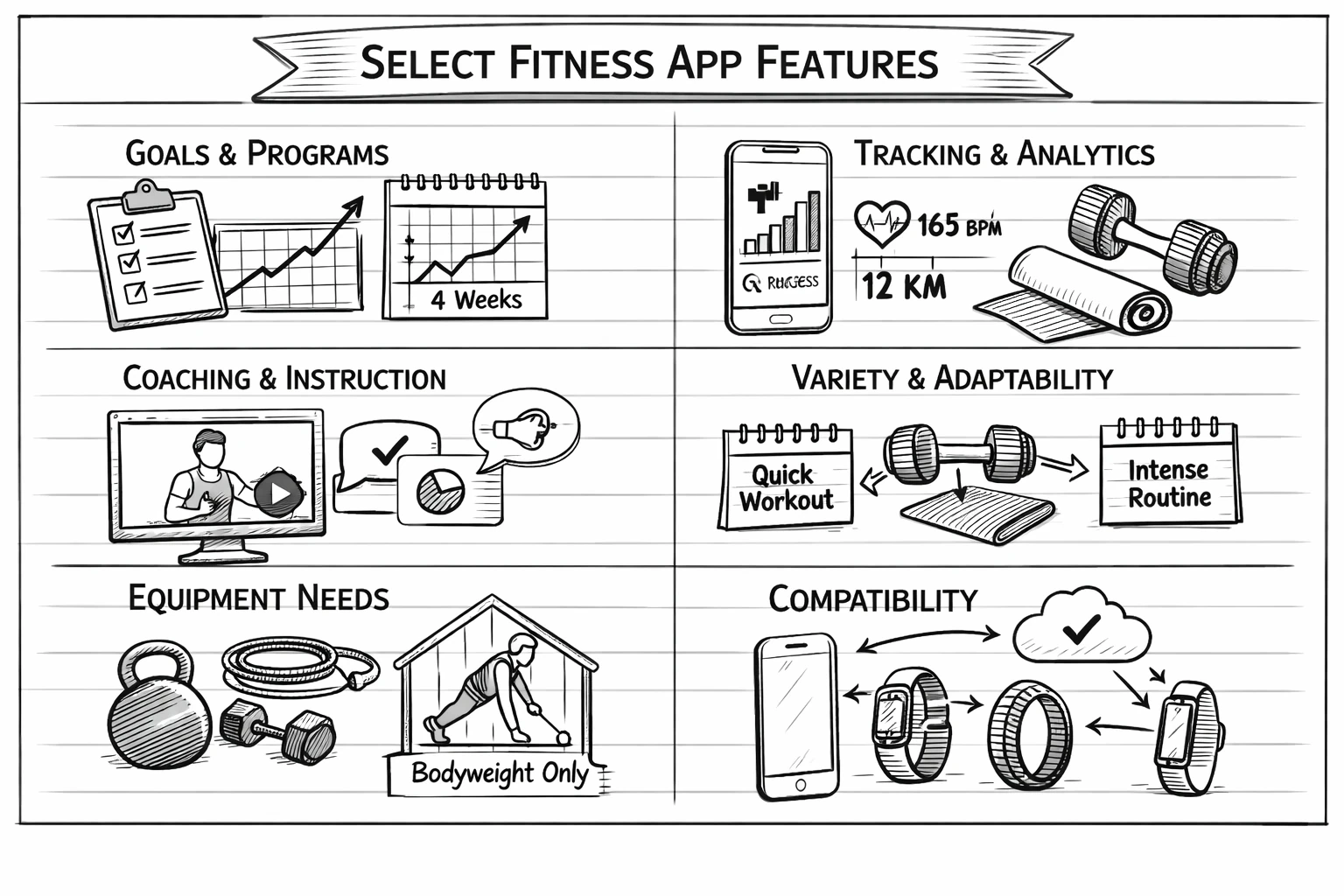
When you compare apps, focus on a few key features that matter for your goals. Below is a concise list to guide your review. Use this list to filter options and short list the best picks for a trial.
- Goals and programs: Programs should match your target and be clear in progression and time commitment.
- Tracking and analytics: Good tracking shows progress in reps, weight, time, or distance and offers simple charts you can read.
- Coaching and instruction: Video, audio, or clear text cues help you do the moves safely and correctly.
- Variety and adaptability: The app should offer alternate workouts for busy days and scale intensity as you improve.
- Equipment needs: Check if workouts need special gear or if there are bodyweight options for home use.
- Compatibility: Works with your phone, watch, and any trackers you own so data syncs smoothly.
- Social and motivation: Community support, challenges, or coach check-ins can help you stay consistent.
- Privacy and data controls: Clear settings for what data the app collects and how it is used.
After scanning these features, rank apps by how many boxes they tick for you. A top pick will match most of your must-haves and a few nice-to-haves. That approach narrows choices and makes trialing easier.
Remember that some apps trade depth for simplicity. A simple app might have fewer features but be easier to use every day. Balance features with ease of use to find an app you will actually open tomorrow.
Match app to your lifestyle
Your daily life shapes which app will survive the long run. Look at your schedule, space, and energy. If mornings are busy, an app with 10 minute options is better than one built around hour long workouts. Small wins add up fast.
Consider where you will exercise. An app that needs a treadmill is a poor match if you train outdoors. If you travel, an app with offline workouts and minimal equipment will keep you on track. Match location needs to app features before you buy.
Also think about social needs. Some people thrive with live classes and group challenges. Others prefer private solo training. Choose the social style that keeps you motivated and consistent. That choice can be more important than features at first.
Finally check device fit. If you like a guided watch experience, pick an app with a good watch companion. If you rely on your phone only, ensure the app interfaces are clear and easy to use while moving. Device fit reduces friction and keeps you consistent.
Try before you commit
Testing an app before paying is one of the best ways to select fitness app that truly works for you. Many apps offer free trials or free tiers. Use these trials to test workouts, tracking, coaching style, and daily reminders. Trial time gives real insight.
During a trial, test at least a week of real use. Try different workouts, change intensity, and use it at different times of day. This helps you see if the app matches your energy, schedule, and learning style. Short tests only show part of the picture.
Track one or two simple metrics while testing. Note how your body feels, how easy the app is to use, and if you stay motivated. Also test practical items like syncing data, notification frequency, and how the app handles missed workouts. These small checks matter.
After the trial, compare notes against your goals list and feature checklist. If an app keeps you engaged and supports your target, it is worth paying for. If not, move on quickly and test the next option until you find the best fit.
Privacy and data considerations
Privacy matters when you use a fitness app. Many apps collect health data, location, and personal details. Before you commit, check the app privacy settings and the data types it stores. Simple clarity in the app makes it easier to trust the service.
Look for clear options to control data sharing. You should be able to pause data sync, delete account data, or opt out of marketing. If a service hides these choices in long legal text, treat that as a warning sign. Good apps make control straightforward and visible.
Also check if the app shares data with third parties. Some free apps trade data for revenue. If you prefer a safer route, consider paid apps with clear privacy promises. A small monthly fee can be worth extra control over your personal information.
Finally note backup and sync options. If the app stores workouts locally only, you could lose history if you change phones. Apps with cloud backup and export options give you more control and protect your progress over time.
Pricing and value
Price is not the only measure of value. A free app that you use daily can be worth more than an expensive app you rarely open. Compare price to expected use and the features that matter to your goals. That will tell you the real value.
Check subscription models carefully. Some apps lock key features behind a premium tier while others include most features in one low fee. Look at the features you need and see if they are in the free tier or require an upgrade. That will help you avoid surprises.
Also consider family and device plans. If multiple people in your household will use the app, a family plan can be far cheaper per user. Look at device limits and account sharing rules before you subscribe. A small change can save money and improve access.
Finally think about long term cost. If the app helps you build a habit and reach a goal, the subscription can pay for itself in saved trainer costs and better health. Choose an app that balances cost with the features you will actually use every week.
Key Takeaways
To select fitness app that fits your life, start with clear goals and time limits. Know if you want strength, endurance, or daily movement and set a realistic timeline. That makes filters easy and speeds up decision making.
Check a short list of features that match your needs and then test each app in real life. Use free trials to test workouts, coaching, tracking, and device fit. A week of real use shows what marketing cannot show.
Pay attention to privacy and price. Choose apps with clear data controls and a fair pricing model. Remember that the best value is an app you use often and that supports your progress toward your goals.
Follow these steps, stay flexible, and pick the app that fits your routine. With the right match you will enjoy your workouts more and reach results faster. Good luck finding the perfect fit as you select fitness app for your lifestyle.
